


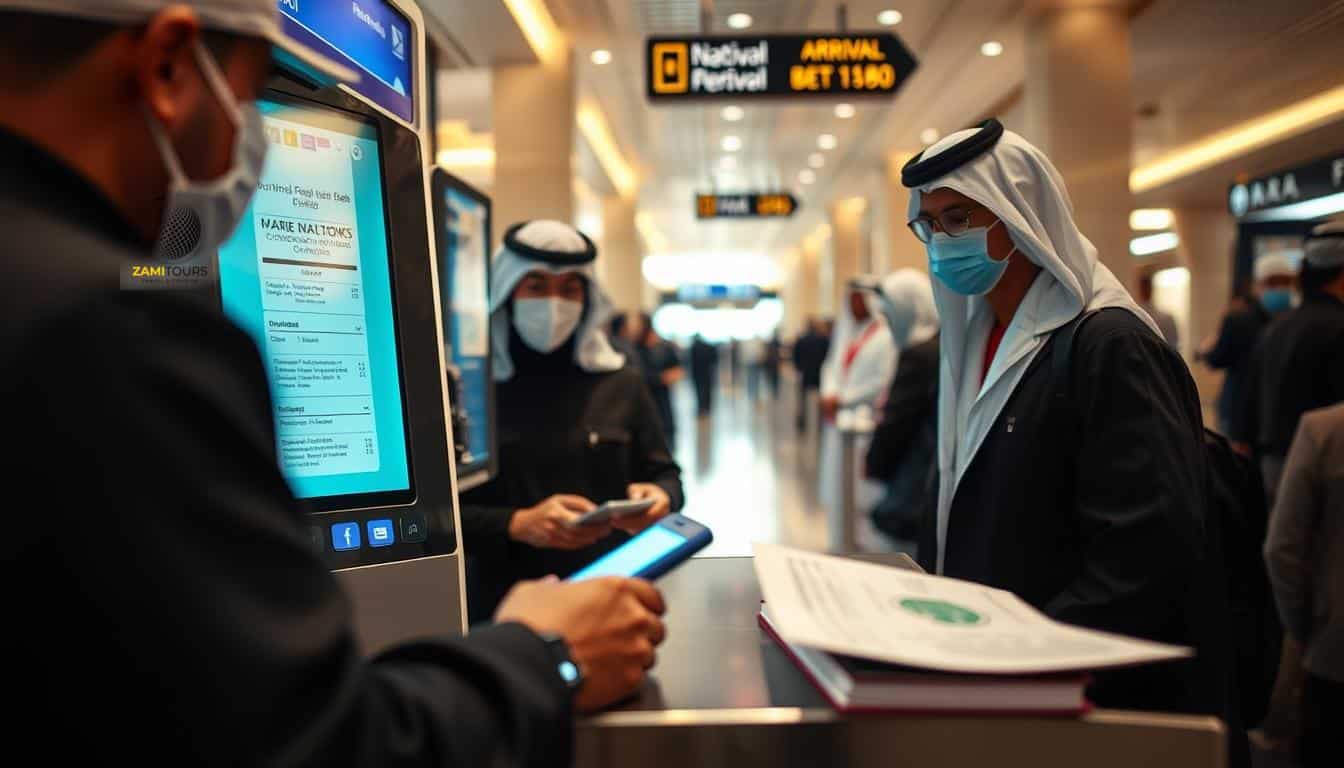

Introduction: The Gateway Verification Process
UAE visa barcode verification at Dubai airport represents the critical frontier of the Emirates’ immigration security and efficiency. Every year, millions of travelers experience this streamlined yet thorough process that balances hospitality with vigilance. Whether you’re a first-time visitor or frequent business traveler, understanding this verification system transforms your arrival from a moment of anxiety to one of confident expectation. Furthermore, this behind-the-scenes look demystifies what happens when your passport is opened and documents are scanned at the immigration counter.
The verification landscape has evolved dramatically, especially with Dubai’s smart city initiatives. Consequently, what appears as a simple barcode scan activates a complex series of database checks, biometric validations, and security protocols. Specifically, the UAE visa barcode verification at Dubai airport involves multiple government systems working in seamless synchronization. Meanwhile, immigration officers are trained to conduct these verifications with both speed and precision, ensuring passenger flow meets Dubai International Airport’s renowned efficiency standards.
2026 marks continued advancement in biometric integration and artificial intelligence within the UAE visa barcode verification framework. This aligns with the UAE’s Vision 2030 goals for creating seamless, secure travel experiences. For travelers and businesses alike, understanding this process is no longer optional—it’s essential for smooth entry. Therefore, this comprehensive guide illuminates each step, from the moment your visa barcode is scanned to the final stamp in your passport.
Practical implications extend beyond mere curiosity. It revolutionizes how travelers prepare their documents and manage expectations. Stakeholders benefit from reduced anxiety, fewer entry issues, and clearer understanding of rights and responsibilities. Moreover, this knowledge is particularly valuable for travel agents and corporate travel managers arranging group entries. Consequently, armed with this information, you can navigate the UAE visa barcode verification at Dubai airport with the confidence of an informed traveler.
Understanding UAE Visa Barcode Verification at Dubai Airport
The UAE visa barcode verification at Dubai airport is the official process where immigration authorities validate the authenticity and status of your entry permit. This systematic check occurs the moment you present your passport and visa copy to the immigration officer. Essentially, the barcode on your visa contains encrypted data linked directly to the Federal Authority for Identity, Citizenship, Customs & Port Security (ICP) database. When scanned, it retrieves your complete visa application details, sponsor information, and security clearance status in real-time.
Furthermore, this verification serves multiple crucial functions beyond simple validation. It confirms your visa hasn’t been cancelled or altered since issuance. The system also checks for any entry bans or alerts associated with your passport number. Additionally, the UAE visa barcode verification at Dubai airport cross-references your arrival against expected entry dates and port restrictions. Meanwhile, the officer visually verifies that the passport photograph matches your appearance and checks for any signs of document tampering.
Key components activated during UAE visa barcode verification include:
- Visa Database: Contains original application data submitted by your sponsor or agent
- Security Watchlists: National and international security databases
- Immigration History: Your previous entries, exits, and visa records in UAE
- Biometric Repository: Fingerprint and facial recognition data for verification
- Sponsor Validation: Confirms your visa sponsor’s status and validity
- Health Systems: Pandemic-era protocols and vaccination records
Therefore, what seems like a quick scan is actually accessing multiple layers of secure information. This integrated approach explains why the UAE visa barcode verification at Dubai airport is both rapid and remarkably thorough. The system’s efficiency is why Zami Tours processes 1000+ UAE visas daily with confidence, knowing each undergoes this rigorous validation upon arrival.
Why Immigration Verification Matters in 2026
Immigration verification represents the frontline of national security and regulatory compliance for any country. In 2026, its importance has multiplied with increasing global mobility and sophisticated document fraud techniques. The UAE visa barcode verification at Dubai airport specifically addresses these evolving challenges through technological advancement and procedural rigor. Consequently, this system protects not just national interests but also legitimate travelers from identity theft and document fraud.
Moreover, proper verification maintains the integrity of the UAE’s immigration system. It ensures visas are used by the rightful holders for their intended purposes. This directly impacts tourism sustainability, business environment stability, and resident security. Specifically, the thorough UAE visa barcode verification process deters visa trading, overstaying, and unauthorized employment. Meanwhile, it facilitates legitimate travelers by quickly differentiating them from potential security risks.
From a traveler’s perspective, understanding this process matters for practical reasons. First, it explains potential delays or additional checks you might encounter. Second, it highlights why document accuracy during application is paramount. Third, it demonstrates why using reputable agents like Zami Tours—with their automated Ninthware system integration—minimizes verification issues. Furthermore, awareness of the verification process helps travelers prepare correct documents and manage arrival expectations effectively.
The economic implications are equally significant. Efficient UAE visa barcode verification at Dubai airport supports Dubai’s position as a global aviation hub. Fast, reliable processing encourages tourism and business travel, directly contributing to the economy. Conversely, lax verification could damage reputation and security. Therefore, the balanced approach—combining speed with thoroughness—serves both national interests and visitor experiences. This is why investment in verification technology remains a priority for UAE immigration authorities.
Key Features of the Barcode Scanning System
The barcode scanning system deployed for UAE visa verification at Dubai airport incorporates advanced technology designed for accuracy, speed, and security. Unlike simple retail barcodes, immigration barcodes contain encrypted data in multiple formats, including PDF417 and QR code standards. When the officer scans your visa, the handheld or counter-embedded reader decrypts this data and queries multiple government databases simultaneously. This happens within seconds, displaying your verification status on the officer’s secure terminal.
Furthermore, the system features redundant validation mechanisms. If the primary barcode is damaged or unscannable, officers can manually enter the visa number or passport details to retrieve the same information. Additionally, the UAE visa barcode verification system at Dubai airport includes real-time updates—if a visa is cancelled while you’re in flight, this appears immediately during scanning. Meanwhile, the system logs every scan attempt, creating an audit trail for security monitoring and process improvement.
Key technological features include:
- Offline Verification Capability: Basic validation continues during system maintenance
- Multi-language Support: Displays information in Arabic and English simultaneously
- Biometric Linking: Automatically retrieves associated fingerprint data for comparison
- Alert Prioritization: Flags critical issues prominently for officer attention
- Mobile Integration: Officers can scan from mobile devices during peak periods
- Data Encryption: All transmitted data uses military-grade encryption standards
Therefore, the reliability of this system explains why immigration procedures at Dubai Airport maintain such high efficiency despite increasing passenger volumes. The technology behind UAE visa barcode verification represents significant investment in border security infrastructure. Consequently, travelers benefit from both security and speed—a combination that distinguishes Dubai’s immigration experience from many other global entry points.
UAE Visa Barcode Verification Current Landscape 2026
The current landscape for UAE visa barcode verification at Dubai airport reflects significant technological integration and procedural refinement. In 2026, the system has evolved beyond simple barcode reading to incorporate artificial intelligence, predictive analytics, and enhanced biometric matching. Most noticeably, the percentage of automated verifications has increased, with more passengers eligible for smart gates and self-service kiosks. However, manual verification remains essential for first-time visitors, certain nationalities, and cases requiring additional scrutiny.
Moreover, database integration has expanded substantially. The UAE visa barcode verification system now connects with interpol databases, airline advance passenger information systems, and regional Gulf cooperation council security networks. This creates a comprehensive security web that activates with each scan. Specifically, 2026 enhancements include facial recognition matching between your live image, passport photo, and visa application photograph. Meanwhile, behavioral analytics software assists officers in identifying potentially deceptive behavior during the verification interview.
Key 2026 developments in UAE visa barcode verification include:
- AI-Powered Risk Assessment: Algorithms evaluate verification patterns to flag anomalies
- Blockchain Verification Trials: Pilot programs testing blockchain-validated visas
- Health Status Integration: Vaccination and health declaration data linked to visa records
- Mobile Pre-Verification: Option for certain travelers to complete partial verification before arrival
- Enhanced Training Simulators: Officers train with virtual reality scenarios for complex cases
- Environmental Sensors: Detection of altered documents through specialized scanning
Consequently, travelers in 2026 experience a more seamless yet more thoroughly verified entry process. The UAE visa barcode verification at Dubai airport represents a model for modern border management—balancing hospitality with security through technology. This evolving landscape is why partnering with experienced providers like Zami Tours, who maintain cutting-edge application systems like Ninthware, ensures your visa meets all current technical requirements for smooth verification.
UAE Visa Barcode Verification Requirements Process
The requirements process for UAE visa barcode verification at Dubai airport begins long before your flight lands. Successful verification depends on meeting specific documentation, formatting, and procedural standards. First and foremost, you must possess a valid visa printout with a clear, unscathed barcode. This document should be printed on A4 paper with high resolution—blurry or pixelated barcodes frequently cause scanning difficulties. Additionally, your passport must match the details encoded in the barcode exactly, with no discrepancies in name spelling, nationality, or birth date.
Furthermore, the verification process requires specific traveler actions. You must present your documents in the correct order: passport opened to the photo page, followed by the visa printout. During peak times, officers appreciate documents being presented together to expedite the UAE visa barcode verification. Meanwhile, you should be prepared to provide additional information if requested, such as return tickets, hotel confirmations, or sponsor contact details. While not always checked, having these documents readily available prevents delays if your verification requires additional validation.
The complete requirements checklist includes:
- Original Passport: Valid for at least six months with blank pages
- Visa Printout: Clear barcode, printed in color recommended
- Supporting Documents: Return ticket, accommodation proof, travel insurance
- Biometric Readiness: Clean fingers for fingerprint scanning (no cuts, henna)
- Payment Confirmation: Receipt of visa fees if questioned about payment
- Sponsor Information: Details of who arranged your visa if requested
Therefore, understanding these requirements significantly smooths your UAE visa barcode verification experience at Dubai airport. The process is designed to be straightforward for compliant travelers but can become complicated when requirements aren’t met. This is why Zami Tours emphasizes document accuracy during application—their team verifies every detail matches passport information exactly, minimizing verification issues through meticulous preparation and their automated Ninthware processing system.
UAE Visa Barcode Verification Cost Analysis Pricing
While the UAE visa barcode verification at Dubai airport itself incurs no direct cost to arriving passengers, the underlying visa acquisition costs and potential financial implications of verification failures warrant analysis. The verification process represents the culmination of your visa investment—ensuring you receive the entry you’ve paid for. However, understanding the complete cost structure helps travelers budget appropriately and avoid unexpected expenses related to verification complications.
Moreover, the true “cost” of UAE visa barcode verification extends beyond monetary aspects to include time, convenience, and stress. A smooth verification process adds no extra cost, while a problematic verification can lead to missed connections, additional transportation, or even temporary detention expenses. Specifically, travelers should consider the comprehensive costs associated with their entire visa journey, from application through verification. Meanwhile, choosing reputable agents like Zami Tours, with their transparent all-inclusive pricing, eliminates hidden costs that might complicate verification later.
| Fee Component | 30-Day Tourist Visa | 60-Day Tourist Visa | Impact on Verification |
|---|---|---|---|
| Government Immigration Fee | AED 200 | AED 300 | Must be paid in full for valid barcode generation |
| Service & Processing Charge | AED 300 | AED 400 | Professional services ensure accurate barcode data |
| Medical Insurance (Mandatory) | AED 40 | AED 60 | Policy linked to visa in database |
| Bank Processing Fees | AED 110 | AED 110 | Secure payment trail supports verification |
| Total Estimated Cost | AED 650 | AED 870 | Complete payment ensures smooth verification |
Consequently, investing in proper visa processing through reliable channels represents the most cost-effective approach to UAE visa barcode verification. The minimal savings from questionable agents often result in verification failures that incur greater costs later. Therefore, transparent pricing with established providers like Zami Tours—who process 100+ multiple entry visas daily—offers both financial predictability and verification reliability at Dubai airport.
Step-by-Step Immigration Verification Guide
The step-by-step immigration verification guide demystifies exactly what occurs during UAE visa barcode verification at Dubai airport. From disembarkation to exit from the immigration hall, each phase follows a structured procedure designed for security and efficiency. Understanding this sequence helps travelers navigate the process calmly and respond appropriately to officer requests. Furthermore, this knowledge reduces anxiety, particularly for first-time visitors unfamiliar with Dubai’s immigration protocols.
First, upon entering the immigration hall, you’ll join the appropriate queue—often separated by passport type, residency status, or smart gate eligibility. As you approach the counter, have your documents ready. The officer will greet you and request your passport and visa. Subsequently, they immediately scan the barcode on your visa printout. This initial scan triggers the core UAE visa barcode verification process, retrieving your digital visa record within 2-3 seconds. Meanwhile, the officer visually compares your appearance with both passport and visa application photographs.
The detailed verification steps include:
- Step 1 – Document Submission: Passport and visa copy presented together
- Step 2 – Barcode Scanning: Officer scans visa barcode using handheld or fixed scanner
- Step 3 – System Retrieval: Database returns visa details on secure screen
- Step 4 – Visual Verification: Officer matches photos, checks passport security features
- Step 5 – Biometric Collection: Fingerprints scanned (for first-time visitors)
- Step 6 – Questioning: Brief questions about visit purpose, duration, accommodation
- Step 7 – Decision & Stamping: Entry granted and passport stamped with arrival date
Therefore, what appears as a brief interaction involves seven distinct verification stages. The entire UAE visa barcode verification at Dubai airport typically completes within 2-5 minutes for straightforward cases. However, complex verifications involving database discrepancies or additional checks may extend slightly longer. Consequently, allowing ample connection time (minimum 2 hours for international transfers) accommodates potential verification variations without stress.
UAE Visa Barcode Verification Comparison Analysis
A comparison analysis reveals how UAE visa barcode verification at Dubai airport differs from verification processes at other global hubs and within the UAE itself. Unlike many countries that still rely primarily on visual inspection and manual database queries, Dubai’s system represents a more integrated, technology-driven approach. This comparative perspective highlights both the advantages of the UAE system and areas where travelers should adjust their expectations based on previous international travel experiences.
Moreover, comparing UAE visa barcode verification with verification at other UAE entry points—like Abu Dhabi or Sharjah airports—shows remarkable consistency. The same Federal Authority database serves all ports, ensuring uniform verification standards. However, procedural differences exist in queue management, officer training emphasis, and technology deployment. Specifically, Dubai International Airport typically features more smart gates and automated counters than regional airports. Meanwhile, land border crossings incorporate additional vehicle and baggage checks alongside the standard visa verification.

Key comparison points include:
- Technology Integration: Dubai leads in biometric and barcode integration compared to many European/US airports
- Processing Speed: UAE verification averages 3 minutes vs. 5-10 minutes at many major hubs
- Documentation Requirements: UAE requires physical visa copy, while many countries now accept e-visas on devices
- Questioning Depth: UAE officers typically ask 1-2 questions vs. more extensive interviews elsewhere
- Biometric Collection: UAE mandates fingerprints for most first visitors, similar to US/UK protocols
- Discrepancy Resolution: UAE systems allow some on-the-spot corrections vs. outright refusal systems
Consequently, travelers accustomed to other global entry processes should prepare for a moderately technology-enhanced but still human-managed verification experience. The UAE visa barcode verification at Dubai airport strikes a balance between automation and officer discretion. This comparative advantage explains why Dubai consistently ranks highly in airport efficiency surveys while maintaining rigorous security standards—a dual achievement that many global hubs struggle to match.
Common Verification Challenges and Solutions
Common challenges during UAE visa barcode verification at Dubai airport typically stem from document issues, system discrepancies, or traveler unpreparedness. While most verifications proceed smoothly, awareness of potential complications prepares travelers to respond effectively. The most frequent challenge involves unscannable barcodes due to poor print quality, folding damage, or mobile screen glare if using digital copies. Fortunately, officers have contingency procedures for these situations, but they inevitably cause delays.
Furthermore, database mismatches represent another significant challenge. These occur when information on your visa printout doesn’t perfectly match the digital record or your passport details. Even minor discrepancies—like a missing middle name or hyphen variation—can trigger verification flags. Additionally, technical system outages, though rare, occasionally slow the UAE visa barcode verification process. Meanwhile, traveler-related challenges include insufficient documentation, inappropriate responses to officer questions, or previous immigration violations that appear in system alerts.
Practical solutions for common verification challenges:
- Unscannable Barcode: Carry multiple printouts on different paper types; ensure high-contrast printing
- Name Discrepancies: Apply with exact passport spelling; carry marriage/name change documents if applicable
- System Alerts: Remain calm; explain any previous issues honestly; provide supporting documents
- Additional Documentation Requests: Keep return tickets, hotel bookings, and insurance accessible on phone or paper
- Language Barriers: Use simple English; most officers understand basic travel vocabulary; consider translation apps
- Previous Visa Issues: Declare any prior UAE immigration history proactively to avoid suspicion
Therefore, preparation and documentation accuracy are the most effective solutions to verification challenges. Partnering with professional services like Zami Tours, which utilizes the automated Ninthware system, virtually eliminates data discrepancy issues through systematic validation during application. Their 98% approval success rate directly correlates with smooth airport verifications, as properly prepared applications align perfectly with database records when scanned at immigration.
Smart Gates vs Manual Verification Counters
The choice between smart gates and manual verification counters represents a significant development in UAE visa barcode verification at Dubai airport. Smart gates (E-Gates) offer automated verification for eligible passengers, typically returning residents and nationals from selected countries. These systems use biometric verification—usually iris or facial recognition—combined with barcode scanning to process entries in under 60 seconds. Conversely, manual counters involve officer interaction, physical document inspection, and traditional stamping procedures.
Moreover, eligibility for smart gates has expanded gradually but remains restricted. Currently, UAE nationals, GCC citizens, residents with newer Emirates IDs, and visitors from select “smart service” countries can use E-Gates. First-time visitors generally proceed to manual counters for initial biometric registration. Specifically, the smart gate verification process involves scanning your passport, then your visa barcode, followed by biometric matching. Meanwhile, officers monitor the automated process remotely, intervening only if the system flags an issue or requires additional verification.
Advantages and considerations for each method:
- Smart Gate Advantages: Faster processing (under 1 minute); minimal human interaction; available 24/7
- Smart Gate Limitations: Not for first-time visitors; requires specific passport types; children typically ineligible
- Manual Counter Advantages: Human assistance for complex cases; immediate discrepancy resolution; mandatory for initial registrations
- Manual Counter Considerations: Subject to queue lengths; potential for longer processing during peak hours
- Verification Consistency: Both methods access identical databases; security standards equal across both
- Document Requirements: Smart gates often require passport-only; manual counters need passport plus visa copy
Consequently, travelers should verify their eligibility for smart gates before arrival but prepare for manual verification as a backup. Even eligible passengers might find smart gates temporarily unavailable or experience technical issues requiring manual processing. Therefore, regardless of your verification method preference, ensuring your UAE visa barcode is scannable and documents are accurate remains paramount. This dual preparedness guarantees smooth entry whether you use automated or officer-assisted verification.
Expert Verification Implementation Tips 2026
Expert implementation tips for UAE visa barcode verification at Dubai airport focus on preparation, presentation, and appropriate responses. These insights, gathered from immigration consultants and frequent travelers, significantly enhance your verification experience. First, implement the “document sandwich” approach: place your visa printout inside your passport at the photo page before reaching the counter. This small preparation saves time and demonstrates organization, often positively influencing the officer’s initial impression.
Furthermore, implement technological preparedness. Take a clear photograph of your visa barcode with your smartphone before traveling. If the physical copy becomes damaged or lost, some officers accept digital copies, though policy varies. Additionally, implement arrival timing strategically—flights arriving between 10 PM and 4 AM often experience shorter queues. Meanwhile, implement clear communication protocols: answer questions concisely, maintain eye contact, and avoid unnecessary details unless specifically requested.
Key implementation strategies for 2026:
- Pre-Verification Check: Use online validation services if available to confirm visa status before flying
- Backup Documentation: Carry both physical and digital copies of all supporting documents
- Biometric Preparation: Ensure fingers are clean and dry for fingerprint scanning; remove heavy henna if possible
- Queue Selection: Observe which manual counters move fastest; officers have varying verification speeds
- Children Management: Prepare children’s documents separately; practice polite responses with them beforehand
- Post-Verification Check: Immediately verify stamp accuracy (date, visa type) before leaving counter
Therefore, implementing these expert tips transforms UAE visa barcode verification from a procedural hurdle to a manageable process. The cumulative effect of preparation, organization, and appropriate conduct significantly reduces stress and potential complications. Professional visa providers like Zami Tours naturally incorporate many of these practices through their service—offering pre-arrival checks, document verification, and arrival guidance as part of their comprehensive visa processing, which handles 1000+ UAE visas daily through systematic excellence.
Future of UAE Immigration Verification: Expert Advice 2026
The future of UAE immigration verification, particularly UAE visa barcode verification at Dubai airport, points toward increased automation, biometric integration, and pre-clearance options. By 2026, experts predict significant expansion of contactless verification technologies, possibly incorporating facial recognition as a primary method alongside or instead of barcode scanning. This evolution will likely reduce physical document requirements while enhancing security through multi-modal biometric matching. Consequently, travelers should prepare for increasingly technology-driven verification experiences.
Moreover, blockchain-based verification systems are undergoing pilot testing and may see broader implementation. These would create immutable visa records, virtually eliminating fraud and discrepancy issues. Additionally, artificial intelligence will play a larger role in risk assessment during verification, analyzing travel patterns and documentation consistency in real-time. Meanwhile, integration with global entry programs (like the U.S. Global Entry or E.U. ETIAS) may create reciprocal verification shortcuts for pre-vetted travelers from partner countries.
Expert advice for navigating future verification changes:
- Digital Literacy: Maintain comfort with biometric and digital systems; these will dominate future verification
- Data Accuracy: Double-check personal information in all travel profiles; inconsistencies will trigger increasingly sensitive alerts
- Biometric Management: Update biometric records during each visit if systems permit; current data improves future verification
- Policy Monitoring: Follow official UAE immigration channels for procedure updates before each trip
- Professional Partnerships: Work with agents who invest in verification technology, like Zami Tours’ Ninthware system integration
- Pre-Clearance Utilization: Use emerging pre-arrival verification options when available to expedite airport processing
Consequently, the future of UAE visa barcode verification represents both continuity and change. The fundamental purpose—security validation of entry permissions—remains constant. However, the methods will increasingly leverage technology for efficiency and accuracy. Therefore, travelers who adapt to these changes while maintaining thorough documentation habits will experience the smoothest verification processes. Forward-thinking service providers already anticipate these developments, creating systems that align with both current and emerging verification protocols at Dubai airport and beyond.
Frequently Asked Questions
How long does UAE visa barcode verification at Dubai airport take? For most passengers, the UAE visa barcode verification process takes 2-5 minutes. E-Gate users complete it in under 60 seconds, while manual counters may take slightly longer during peak hours.
What happens if my visa barcode doesn’t scan at immigration? If the barcode doesn’t scan, officers manually verify details in the system. Minor issues are corrected on-site, but significant discrepancies may require secondary inspection or coordination with your visa sponsor.
Is fingerprint verification mandatory for all arrivals at Dubai airport? Fingerprint verification is mandatory for most first-time visitors aged 15+. GCC nationals, children under 15, and diplomatic passport holders are typically exempt from this requirement.
What should I do if there’s an error on my UAE visa stamp? Immediately notify the immigration officer before leaving the counter. Do not accept an incorrect stamp, as it causes major issues during your stay and exit. Corrections are made instantly at the airport.
Can I use the E-Gate for UAE visa barcode verification on my first visit? First-time visitors from eligible countries can use E-Gates if pre-registered via the ‘Smart Gates’ service. Otherwise, first-time arrivals typically proceed to manual counters for initial biometric registration.
What documents do I need ready for UAE visa barcode verification? Have your passport, printed visa copy (with clear barcode), return ticket, and accommodation details ready. Officers may request any of these documents during verification.
How does the immigration database check work during UAE visa verification? The system cross-references your visa barcode against multiple databases including security watchlists, previous UAE immigration history, visa validity, and sponsor records in real-time.
What are the most common reasons for delays during UAE visa barcode verification? Delays typically occur due to unclear barcode prints, system discrepancies, high passenger volume, incomplete database matches, or additional security checks for certain nationalities.
Conclusion
The UAE visa barcode verification at Dubai airport represents a sophisticated yet traveler-friendly system that balances security with efficiency. Understanding this process—from barcode scanning to database checks and biometric validation—empowers travelers to navigate arrival with confidence. The verification landscape continues evolving, with 2026 bringing enhanced technology and streamlined procedures that benefit prepared travelers.
Moreover, the key to smooth UAE visa barcode verification lies in meticulous document preparation and accurate application data. Discrepancies between your physical documents and digital records cause most verification delays. Consequently, partnering with experienced, technology-enabled visa providers ensures your application aligns perfectly with immigration database requirements. The verification process, while thorough, is designed to welcome legitimate travelers efficiently when all elements are in order.
Therefore, whether you’re a tourist, business traveler, or visiting family, approaching UAE visa barcode verification with preparation and understanding transforms it from an immigration hurdle to a simple entry formality. By following the insights in this guide—from document requirements to expert implementation tips—you ensure your Dubai arrival matches the efficiency and hospitality for which the UAE is renowned. The verification system ultimately serves both national security and traveler convenience when approached correctly.